In rural Bihar, migration reshapes intimacy, timing, and decision-making.
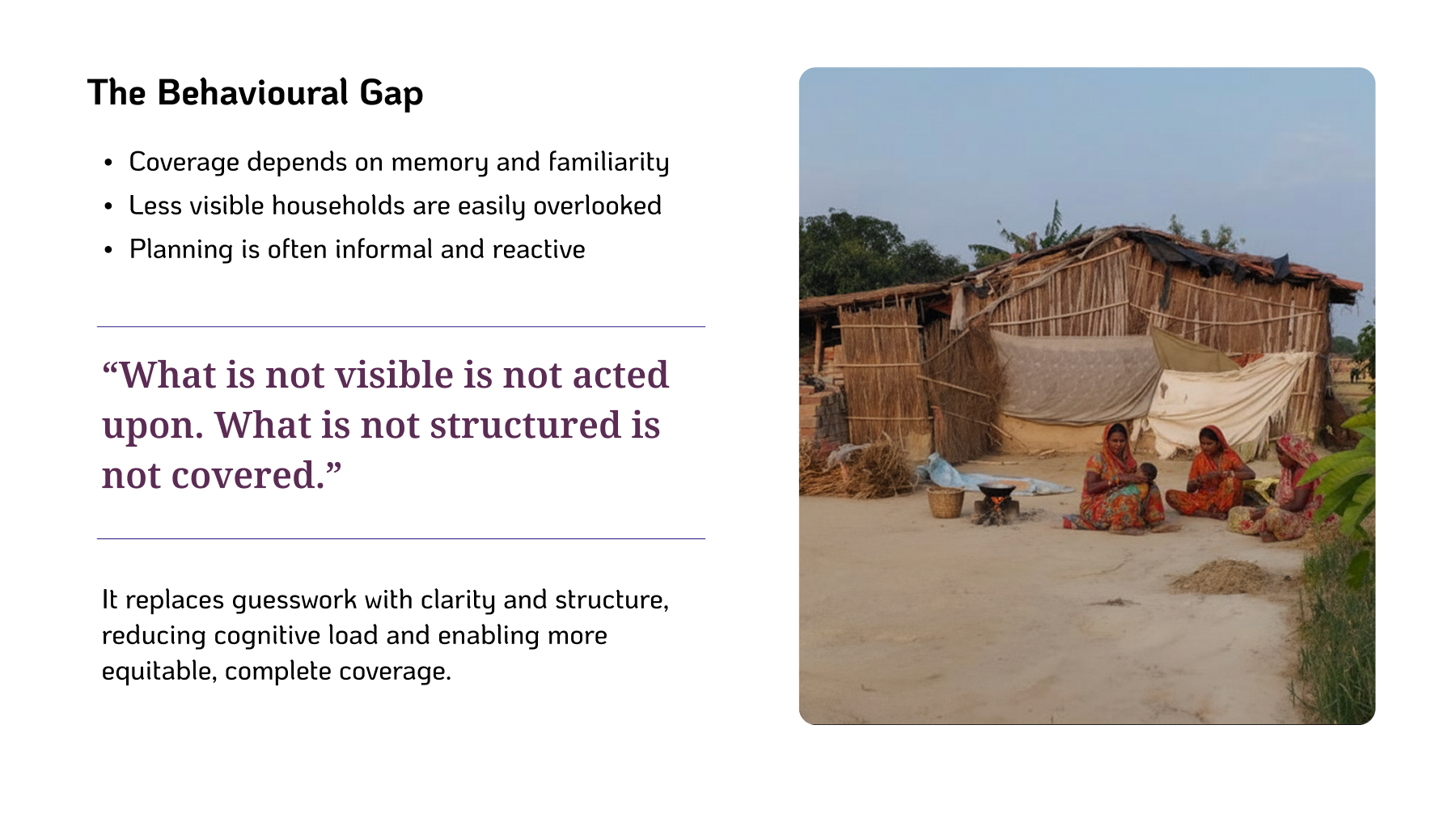
Women with migrant husbands are significantly less likely to use modern contraception than women with resident husbands. For migrant couples, contraceptive need is not continuous; it is episodic, compressed and urgent, often concentrated in short visits home.
Traditional family planning systems assume co-resident couples and predictable behaviour. Migration disrupts that assumption.

Sexual desire is
heightened.

Optimism bias
overrides precaution.

Contraceptive
procurement happens
last-minute, if at all.

Fertility awareness
is limited.

Women’s negotiation
power is constrained.

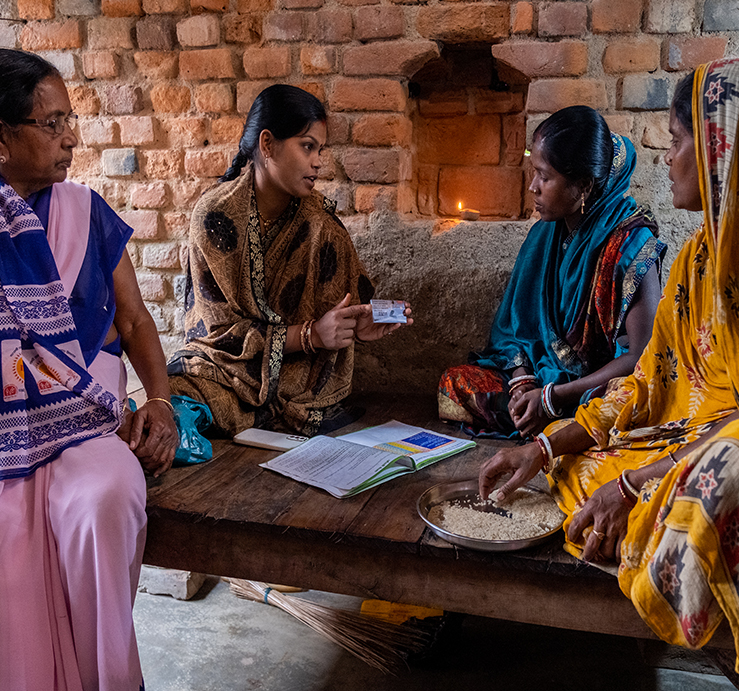
Conducted immersive
design research in high
out-migration blocks
Identified behavioural and
systemic bottlenecks
Developed and tested over
10 solution concepts.

Iterated prototypes
through user testing
The “Migration and Family Planning in Bihar: Innovations, Learning, and Advocacy” project is a collaborative effort between Project Concern International (PCI) and the Population Council (PC). It is funded by the Packard Foundation and runs from July 19, 2023, to February 28, 2026. Tinkerlabs has been engaged as a design partner for this project.
Equip
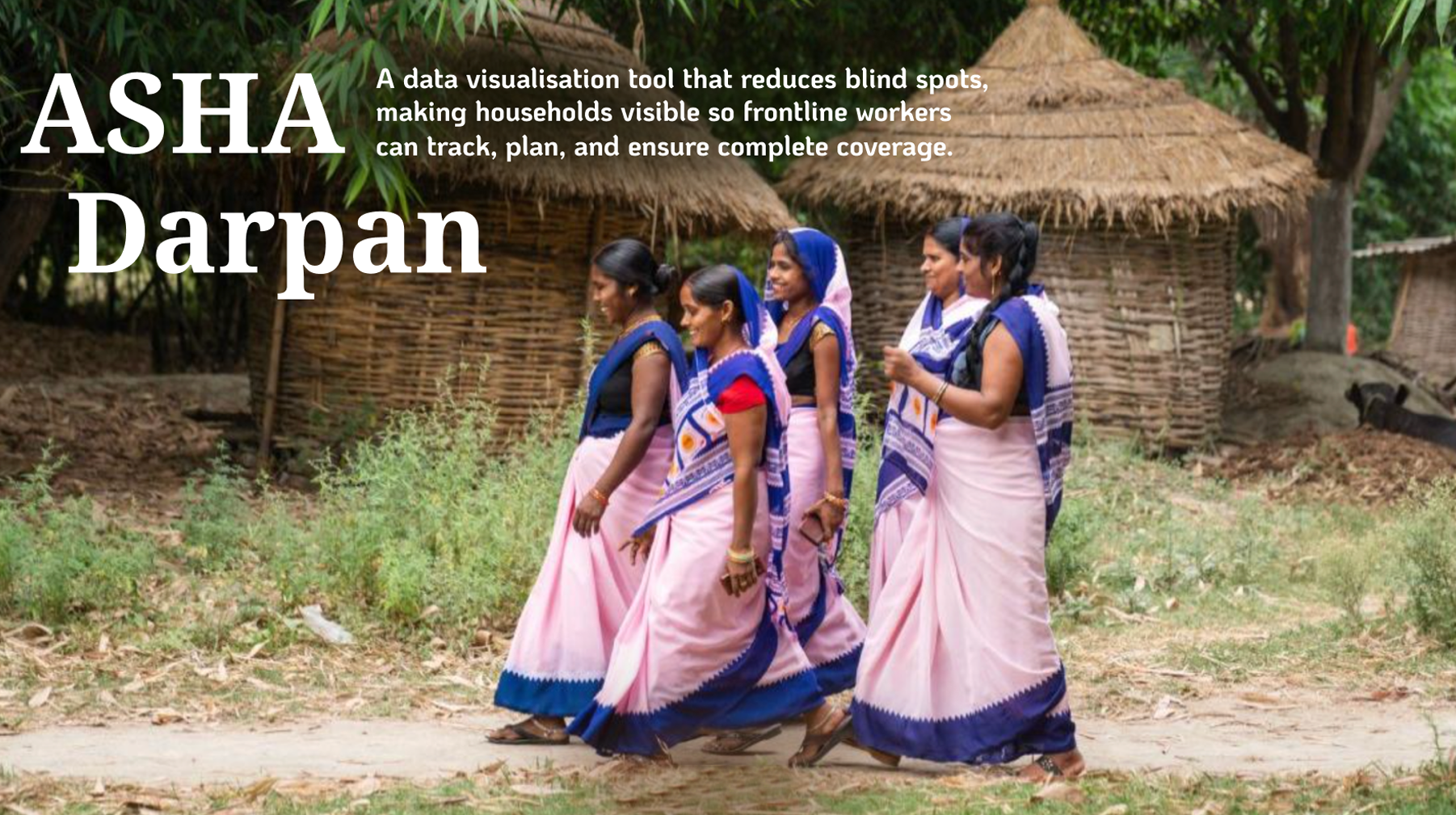
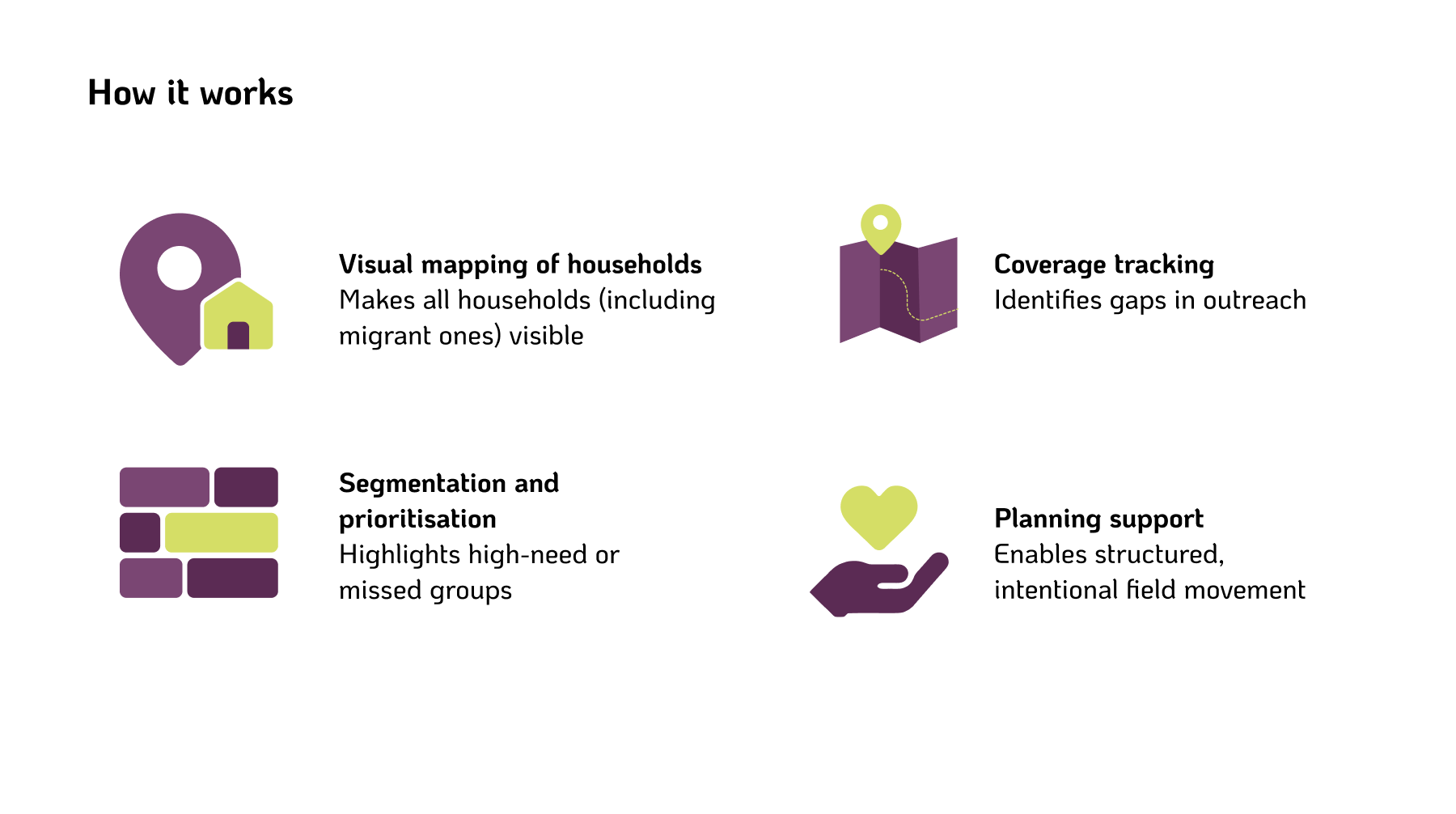
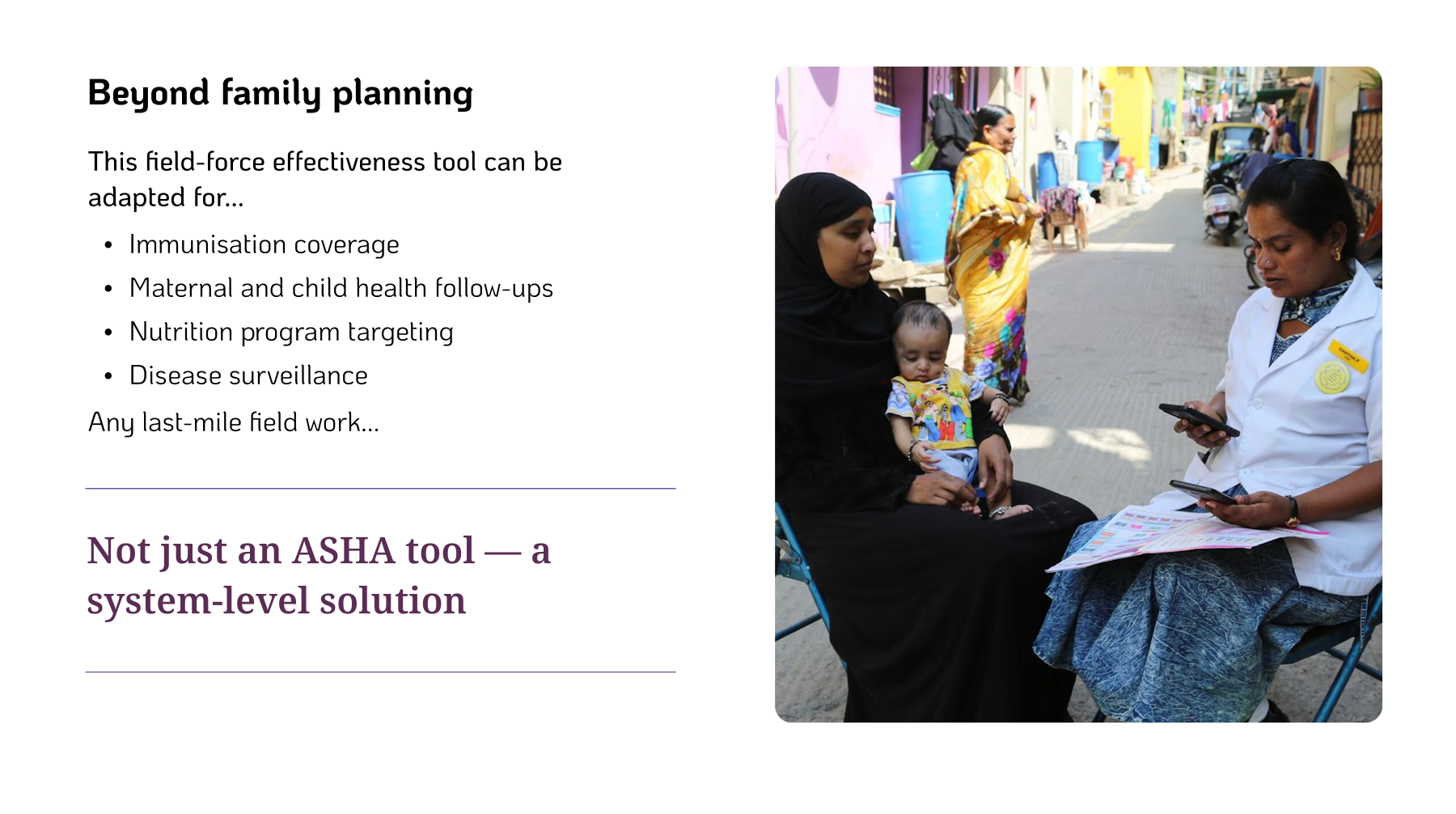
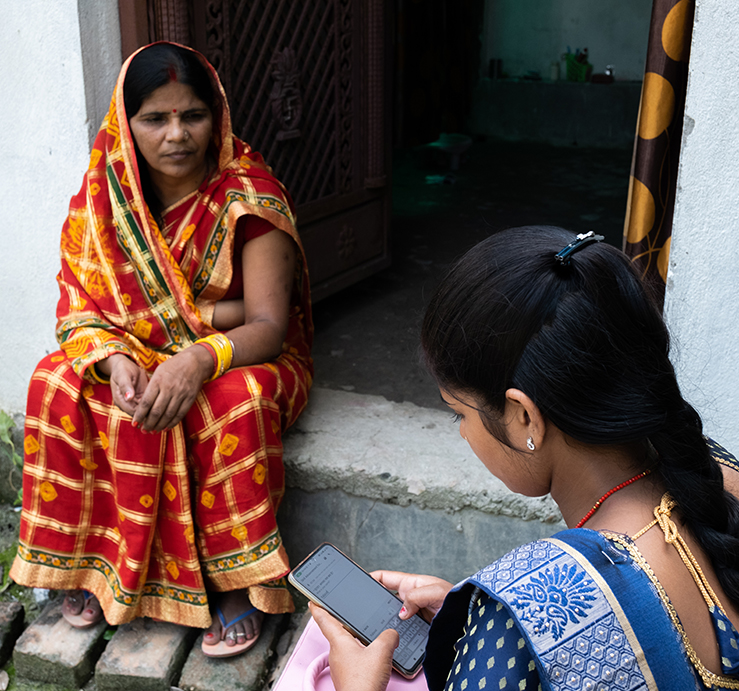
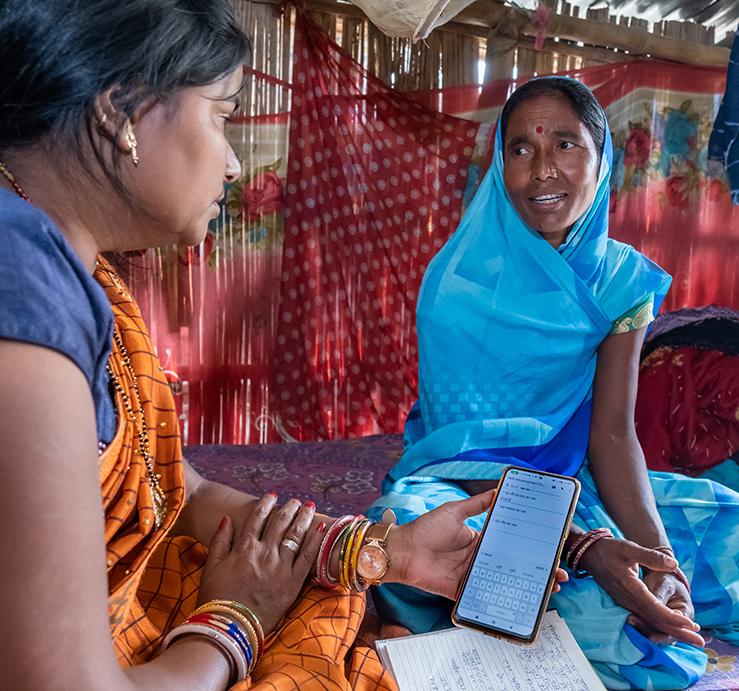
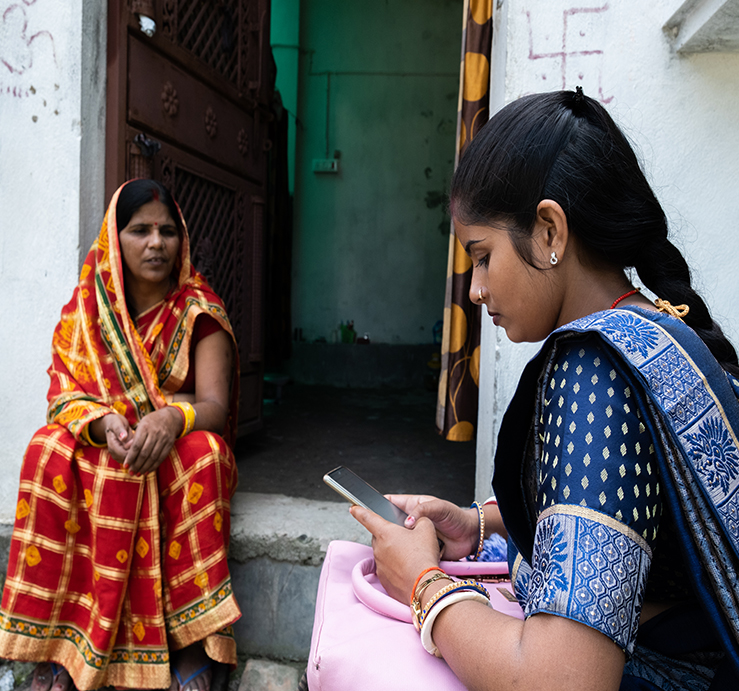
Provide ASHA with a smart app for better home visit planning and tracking missed households.
Plan
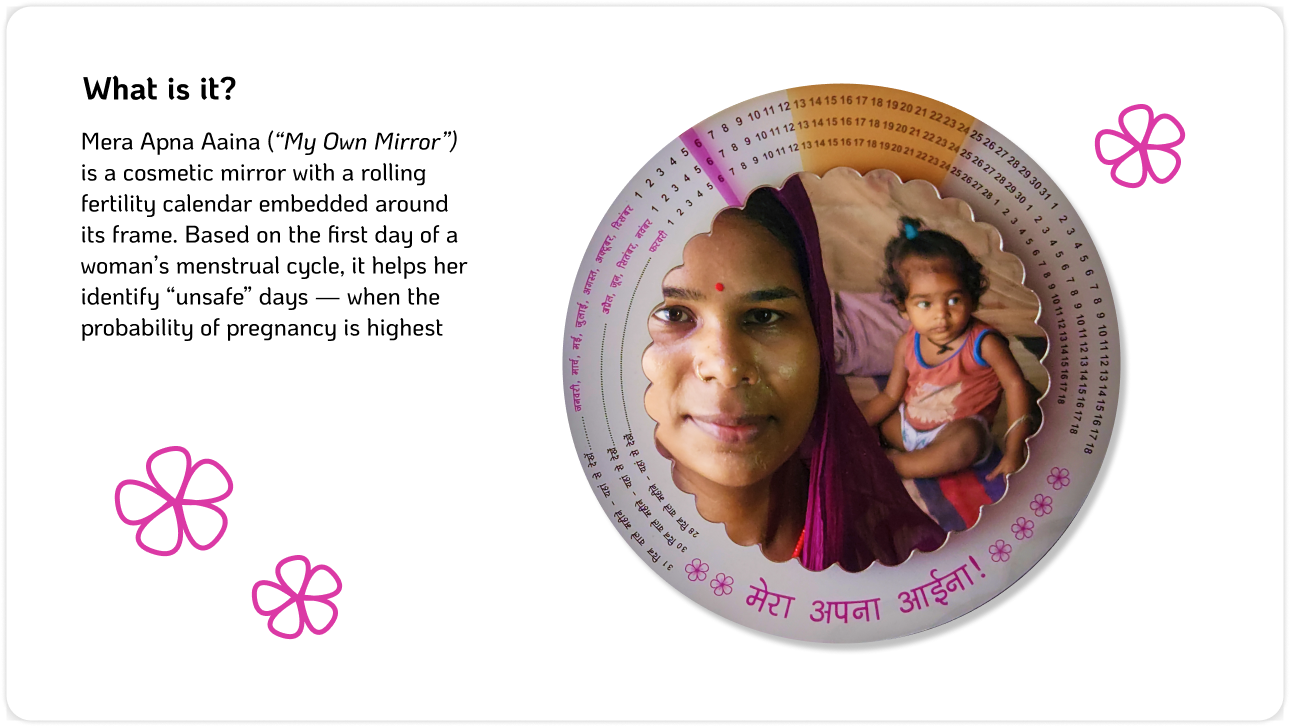
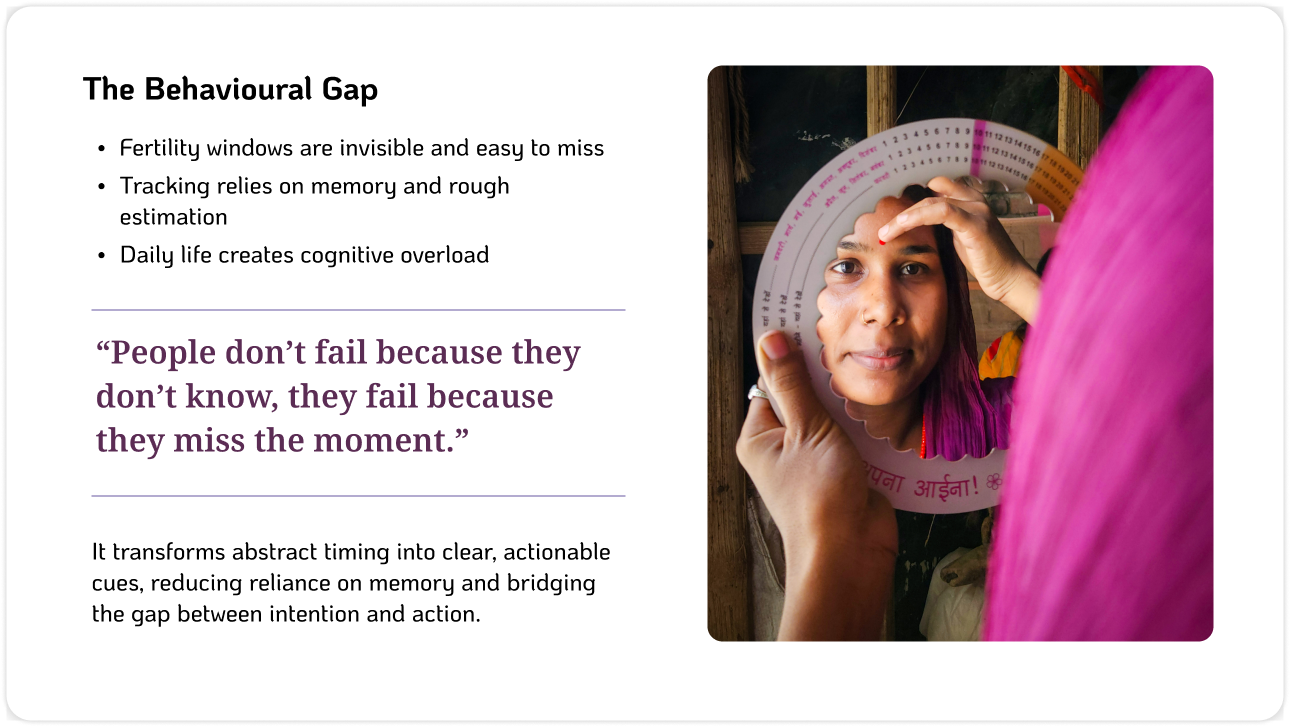
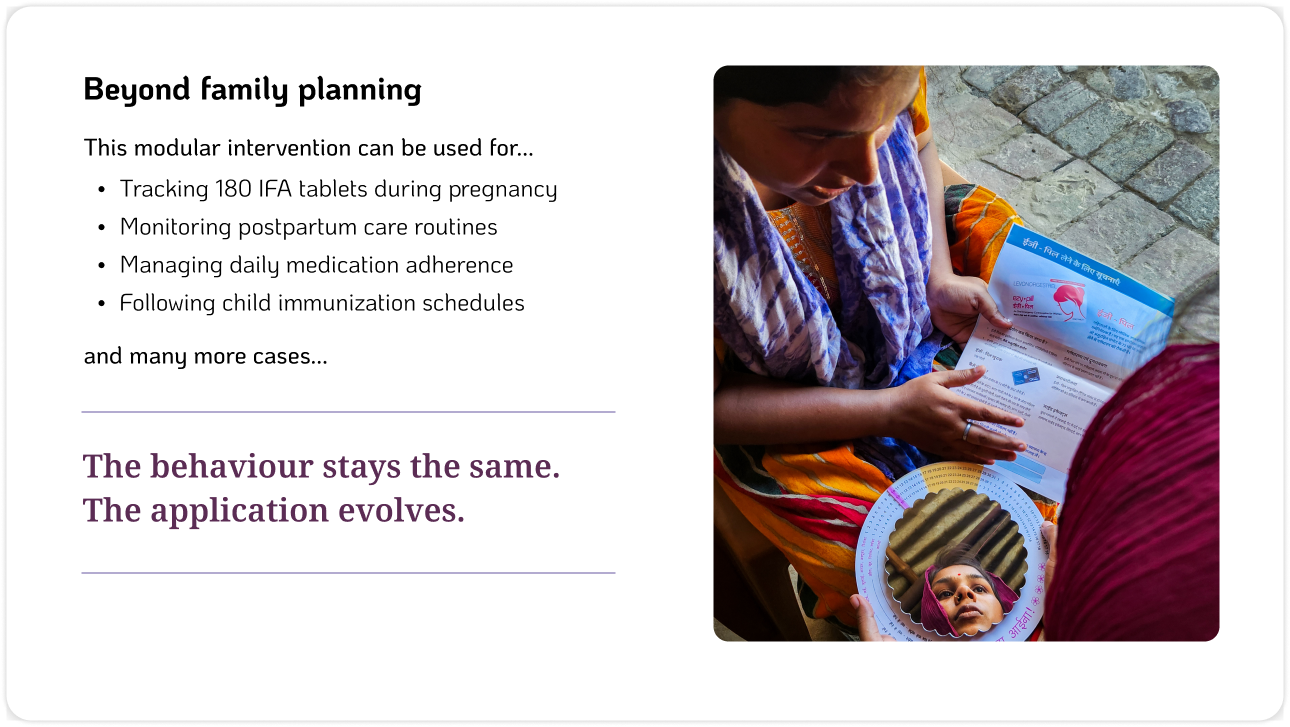
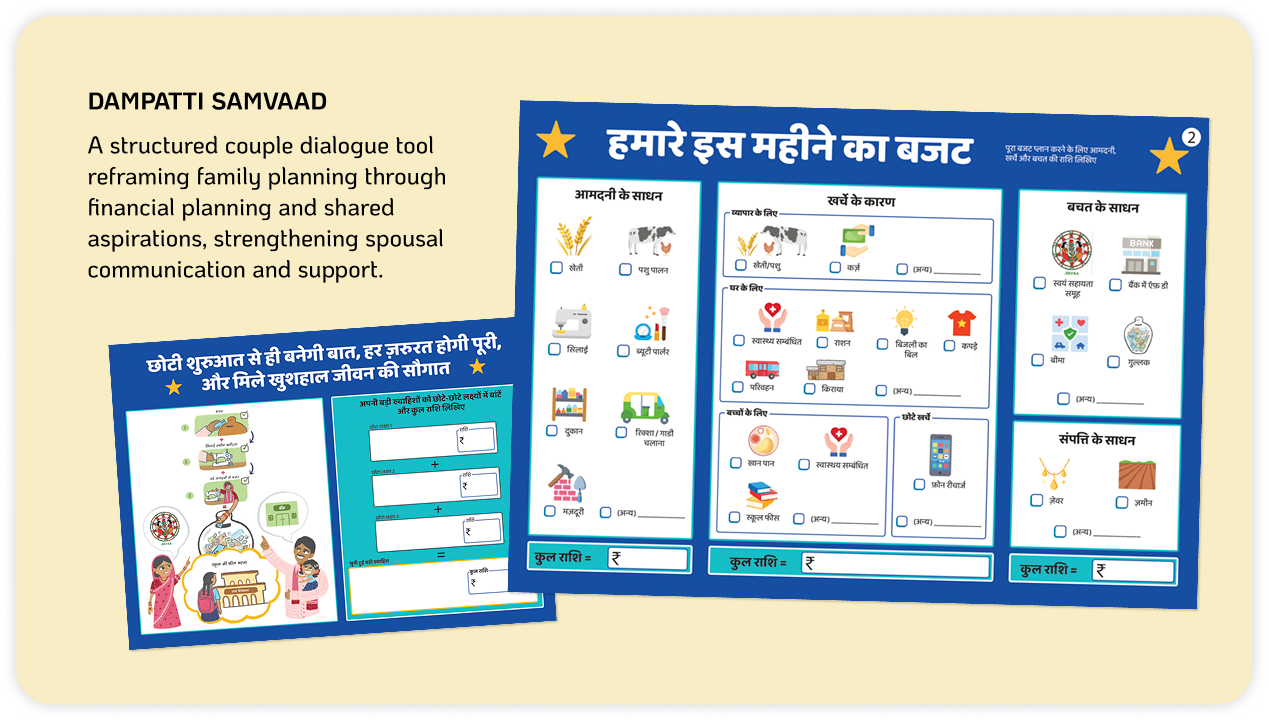
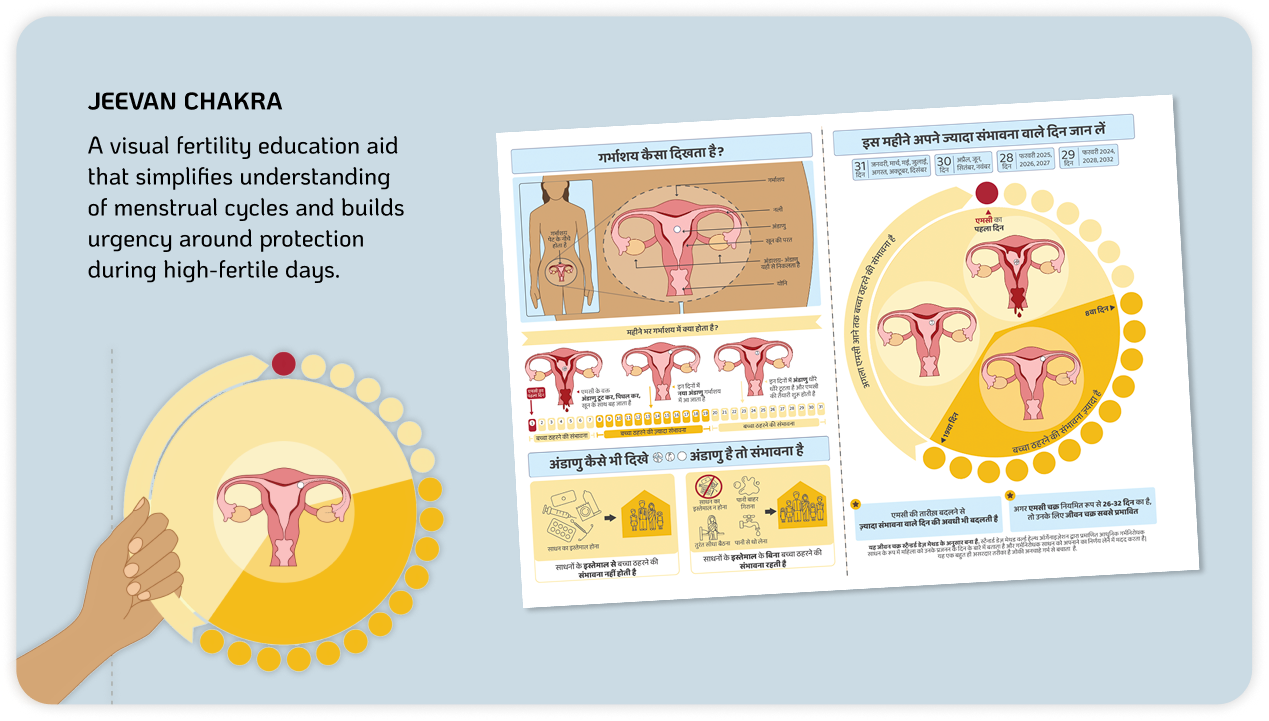
Help women track menstrual and fertility cycles through the “Mera Apna Aaina” system.
Procure
Support women in selecting and procuring suitable contraceptive options easily.
Protect
Encourage couples to use modern contraceptive methods for safe protection.
Recover
Guide families to keep emergency contraceptive pills available for emergency situations.



As migration reshapes families and health needs across Bihar and beyond, family planning systems must evolve with it. FP x Migration lays the foundation for a new approach; one that anticipates episodic contraceptive demand, equips women with greater decision-making power, and enables governments to respond with precision rather than pressure.
This work moves beyond isolated solutions toward a scalable, migration-responsive model for public health programming. It signals what the future of family planning can look like: adaptive, behaviourally informed, system-ready and designed for the realities families actually live in.
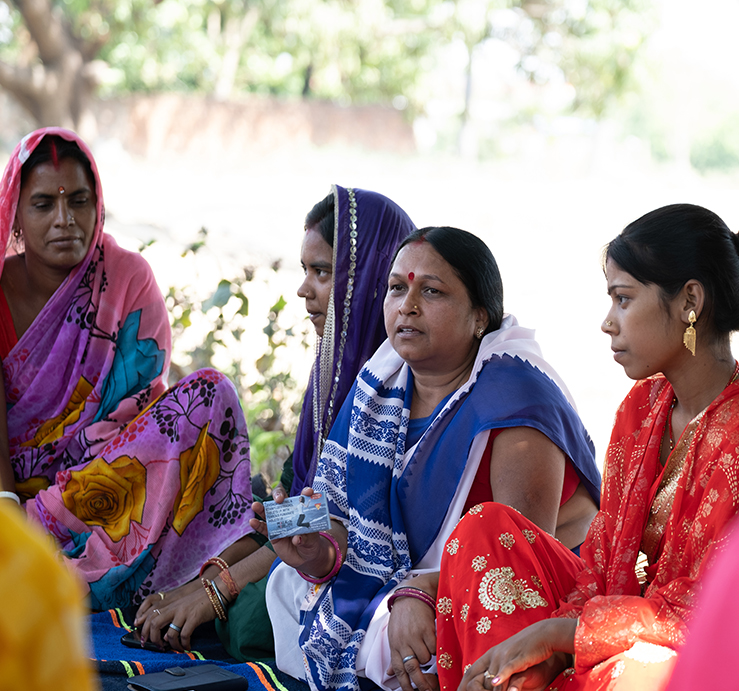
Let’s co-create public health solutions that are rooted in real lives and designed for lasting change. Connect with us to explore partnerships, if you are...

State Government
Exploring innovation
in SRHR

Development Partner
Working in migration,
gender, or health

Foundation
Seeking scalable, evidence-backed design solutions

Research Institution
Interested in
implementation science